
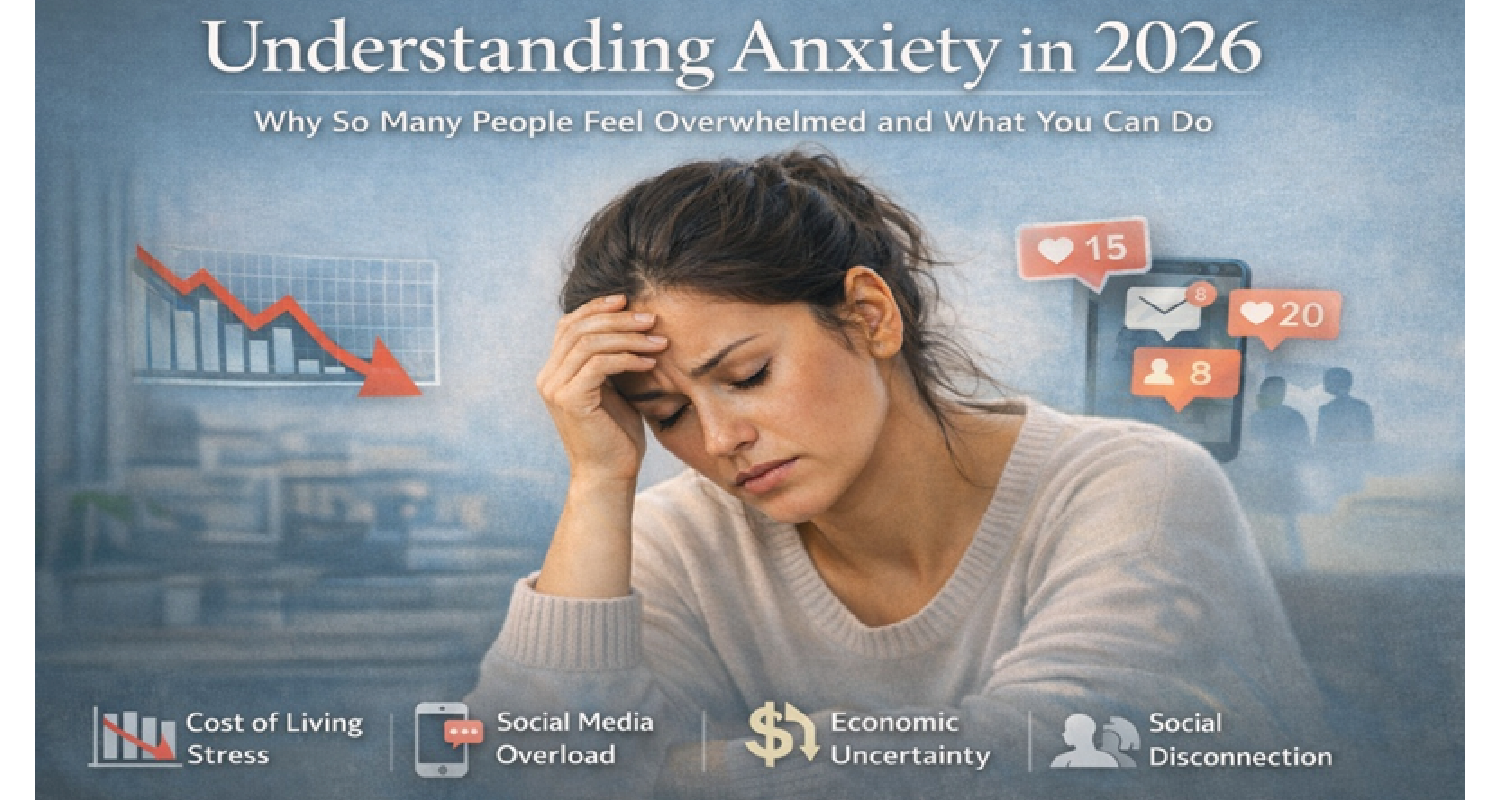
Anxiety is one of the most common mental health concerns in the United States, and for many people, it feels harder to manage lately. That feeling is not imagined. Current federal data show that about 12% of U.S. adults regularly experience feelings of worry, nervousness, or anxiety, and about 19% of U.S. adults have been told by a healthcare professional that they have an anxiety disorder.
If you have felt more tense, mentally overloaded, restless, or emotionally drained, you are not alone. Anxiety is affecting people across age groups, but the reasons often look different now than they did a few years ago. In 2025 polling from the American Psychiatric Association, two-thirds of Americans said they were anxious about current events happening around the world, and 40% of employed adults said they were worried about job security.
The good news is that anxiety is treatable. With the right support, people can learn to understand what is fueling it, respond differently to it, and regain a stronger sense of calm and control.
What Is Anxiety?
Anxiety is the mind and body’s response to perceived threat, stress, or uncertainty. In small doses, anxiety can be protective. It can help people prepare, focus, and respond to challenges. But when anxiety becomes frequent, intense, or hard to turn off, it can start to interfere with sleep, concentration, relationships, work, and daily life.
Anxiety does not always look dramatic. Sometimes it appears as overthinking, irritability, constant mental scanning, difficulty relaxing, or a feeling that your body is always “on.”
Why Anxiety Feels So High Right Now
Several current stressors appear to be shaping the emotional climate people are living in today.
1. Constant exposure to stressful current events
People are carrying more global, national, and local stress in real time. News updates now arrive continuously, often through multiple devices and platforms. APA’s 2025 annual mental health poll found that two-thirds of Americans are anxious about current events, which helps explain why many people feel mentally exhausted even when nothing is happening directly in front of them.
2. Financial pressure and job insecurity
Anxiety rises when daily life feels less predictable. Concerns about rent, groceries, debt, childcare, retirement, and work stability create a chronic background strain. APA reported in 2025 that 40% of employed adults were worried about job security, showing how strongly economic uncertainty is affecting emotional well-being.
3. Digital overload
People are more connected than ever, but not always in ways that feel calming or restorative. In APA polling from 2025, 62% of adults said they feel anxious without access to their phone, and 50% said they had actively limited their social media use in 2025. That combination says a lot: many people recognize that technology can increase stress, even while feeling tied to it.
4. Social disconnection
Even in a hyperconnected world, many people feel emotionally isolated. The U.S. Surgeon General’s advisory on social connection warned that loneliness and isolation are major public health concerns, and that social connection is essential for mental and physical well-being. The advisory also noted that about half of U.S. adults had experienced measurable loneliness even before the pandemic era, which makes clear that this is a broader and more persistent issue.
5. Stress among teens and young adults
Mental health challenges remain especially important among younger populations. KFF reported that about 1 in 5 adolescents experienced symptoms of anxiety or depression, underscoring how widespread emotional distress continues to be for teens.
Common Signs of Anxiety
Anxiety can affect thoughts, emotions, behavior, and the body. Common signs include:
- persistent worry
- racing thoughts
- feeling tense or on edge
- trouble sleeping
- difficulty concentrating
- irritability
- headaches or stomach discomfort
- a fast heartbeat or shortness of breath
- avoiding situations that feel overwhelming
Some people experience anxiety as a constant hum in the background. Others notice it in spikes, especially before work, social situations, conflict, or uncertainty.
When Anxiety Becomes More Than Stress
Stress and anxiety are related, but they are not always the same. Stress is often tied to a specific situation. Anxiety can continue even when the immediate problem is gone, or it can feel bigger than the situation seems to warrant.
It may be time to seek support if anxiety is:
- interfering with sleep
- affecting work or school performance
- straining relationships
- making it hard to focus
- leading to avoidance
- causing physical symptoms that are hard to manage
You do not need to wait until things feel unmanageable to get help.
How Therapy Helps with Anxiety
Therapy can help people do more than just “calm down.” Effective treatment helps people understand their anxiety, identify patterns, and develop practical ways to respond.
Approaches that are often helpful include:
Cognitive Behavioral Therapy, CBT
CBT helps people identify thought patterns that increase anxiety and replace them with more balanced, realistic responses.
Acceptance and Commitment Therapy, ACT
ACT teaches people how to make room for uncomfortable thoughts and feelings without letting them run the show.
Mindfulness-based strategies
These approaches help reduce reactivity and improve the ability to stay grounded in the present.
Supportive therapy
Sometimes anxiety is intensified by grief, relationship strain, burnout, parenting stress, or major life transitions. Therapy can help address the full picture, not just the symptoms.
What You Can Do Right Now
If anxiety has been building, these small steps can help:
Pause your information intake. Continuous exposure to stressful headlines can keep the nervous system activated.
Reduce digital stimulation. Even brief breaks from notifications and social media can help your brain reset.
Protect routines. Sleep, meals, movement, and structure make a real difference.
Stay connected. Anxiety often grows in isolation. Safe, supportive relationships matter.
Notice avoidance. The more life shrinks around anxiety, the stronger anxiety often becomes.
Seek professional support. You do not have to manage this alone.
Anxiety Is Common, But Suffering in Silence Does Not Have to Be
Current data make one thing clear: anxiety is not rare, and it is not a personal failure. It is a common human response to pressure, uncertainty, overload, and disconnection. Federal data, national polling, and public health research all point to the same reality: people are carrying a lot right now.
The encouraging part is that anxiety is treatable. With support, people can learn to manage symptoms, understand triggers, and feel more steady in their daily lives.
If anxiety is making it harder to function, rest, or feel like yourself, reaching out for help can be a meaningful next step.